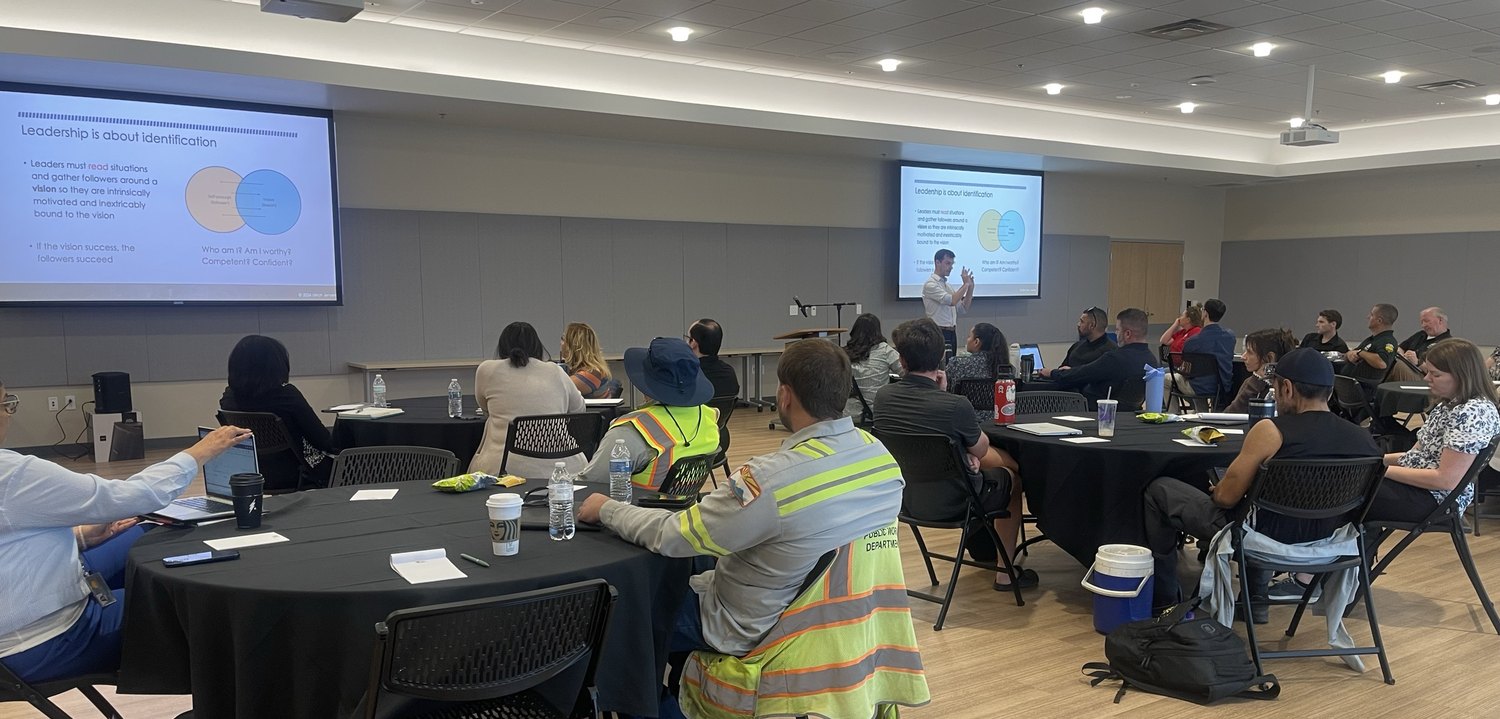
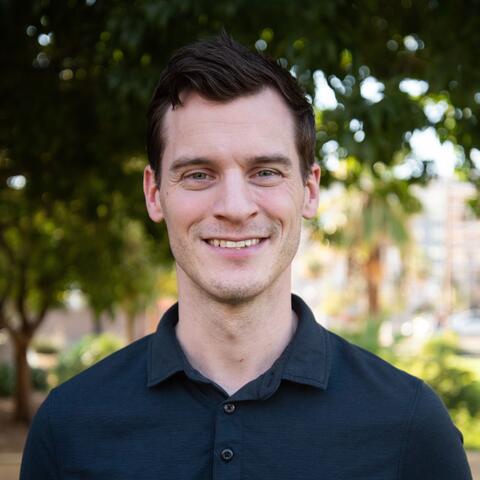
Leadership scientist. Charisma researcher. Keynote speaker.
Anyone can get people to comply. Charisma is how leaders get them to care.
I'm a professor at Arizona State University, and I've spent a decade studying why some leaders move people and most don't. It turns out the answer isn't personality. It's a set of specific things you can learn — and I can show you the evidence.
When U.S. governors used charismatic language, more people stayed home the next day — across all 50 states, regardless of party.
The Leadership QuarterlyCharisma works because it's hard to fake. Which is exactly why faking it fails.
The Leadership QuarterlyA field experiment showing leadership training can actually change behavior on the job — not just in the room.
International Public Management JournalLeaders trained at state, county, and city governments across the United States
Rigorous research combined with practical exercises that immediately translated into usable techniques — extending well past soft-skill communication, into leadership and hard-skill management.
Dr. Jensen’s structured system for developing clear, engaging, and charismatic presentations was intuitive, evidence-based, and accessible to leaders across the County. This training delivers measurable value for public-sector leaders navigating complex organizational and community challenges.
Joe Arriola President, Kern County Management Council
Sr. Fiscal & Policy Analyst, Kern County Administrative Office
Charisma has been studied for decades. Almost none of that research reaches the people who need it — so the field got handed to coaches selling tips nobody has ever measured.
I work the other way around. I run the experiments. I publish the results. And I built a way to measure it — scoring a leader’s language against the tactics the evidence actually supports, then coaching what’s missing.
So when I train your leaders, I don't ask you to take my word for it. I show you the scores before, and the scores after.
Your audience has heard the tips before. What they haven't seen is the data — or what it means for the speech they have to give next Tuesday. Every talk ends with something they can use, and, if you want, a live score on something they wrote in the room.
Anyone can get people to comply. Very few leaders can get them to care. That difference isn't personality and it isn't charm — it's a set of specific verbal tactics, each one measurable, each one learnable, each one supported by evidence most leaders have never seen. The talk on what charisma actually buys you: motivation, discretionary effort, people who move because they want to.
In spring 2020, every U.S. governor faced the same problem: persuade a divided public to do something inconvenient, immediately, on nothing but their word. We coded 350 of their speeches and matched them against what people actually did the next day. What we found should change how you think about every high-stakes message you send.
Charisma isn't charm and it isn't confidence. It's a signal that's expensive to send, which is precisely why it gets believed — and precisely why performing it never lands. Understand that, and the whole thing stops being mysterious and starts being learnable.
The most common thing said about leadership training is that it doesn't transfer. Usually that's true. My field experiment shows what makes it transfer — and I'll show you the instrument that proves whether it did. Fully interactive: the audience writes, scores, revises, and watches their own numbers move.
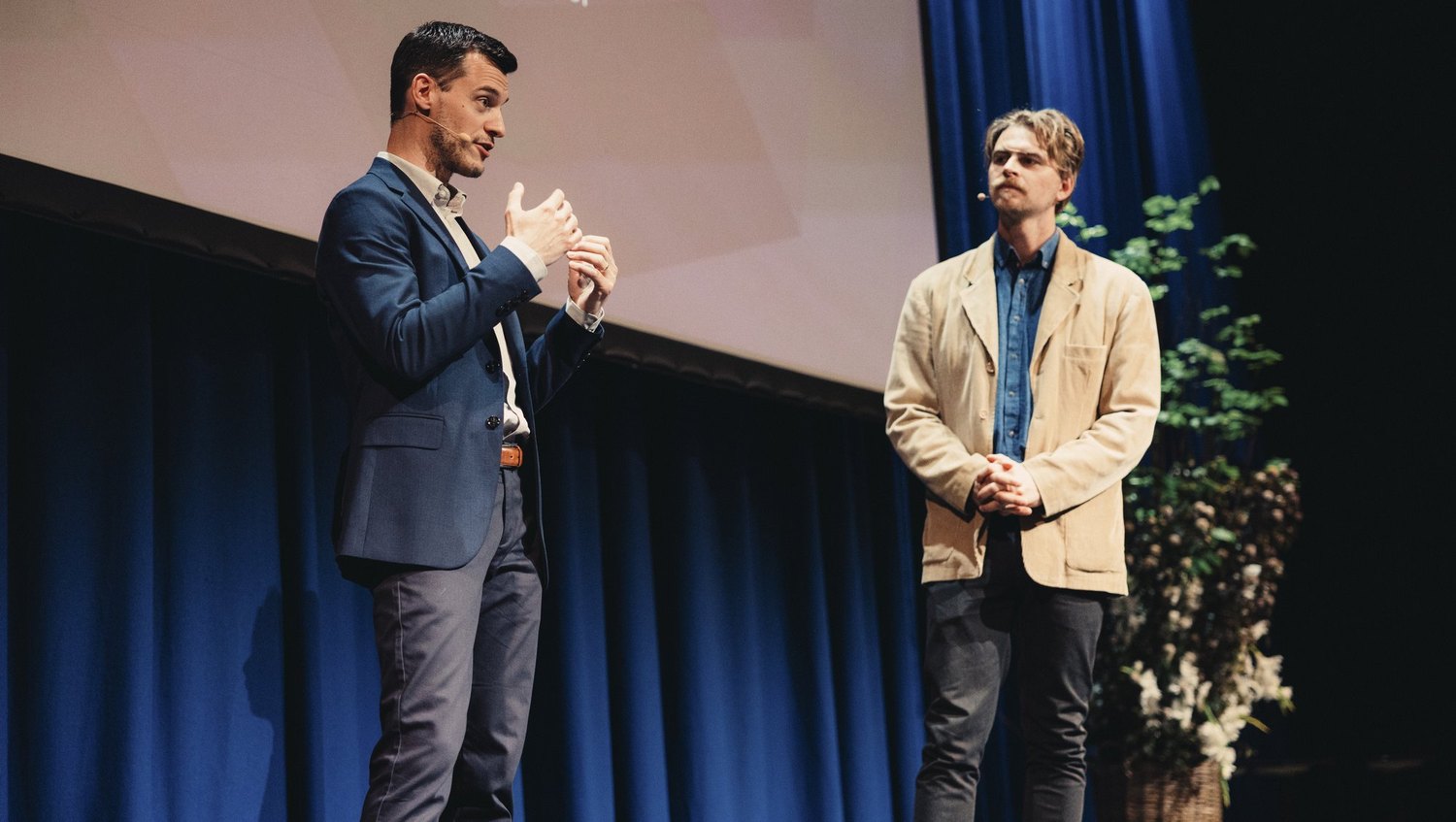
Mine can. We run the workshop. Your leaders write. We score their language against the published tactics — before, and after. You get a report showing what moved. That's not a promise. It's a measurement.
Before we meet, participants submit real material — an all-hands opener, a change announcement. We score it against the published tactics. Nobody sees anyone else's number.
Half or full day. The evidence, the nine tactics, and then the part that matters: they rewrite their own material, live, with coaching.
Where most training dies. My published field experiment tested a fix — just-in-time nudges that arrive when the skill is needed, not weeks earlier in a classroom. We build it in.
You get a pre/post report on what actually changed — and your leaders leave with the tactics, the scoring rubric, and their own numbers.
What we don't do: write your leaders' speeches for them. A leader reading someone else's words is exactly what audiences detect and discount. We teach them to strengthen their own.
First cohort: a leadership program with the City of Goodyear, Arizona. Built for public agencies, health systems, universities, and companies that have to show their development spend did something.
Not a CV. Five studies, in plain English.
We coded charismatic rhetoric in 350 U.S. governor speeches during the early pandemic and matched it to anonymized mobility data. When governors spoke more charismatically, more people stayed home the next day — regardless of state ideology or the governor's party.
Combating COVID-19 with Charisma: Evidence on Governor Speeches in the United States · The Leadership QuarterlyA laboratory test of why charismatic signals get believed: they're hard to produce, and that difficulty is the point.
Charisma Is a Costly Signal · The Leadership Quarterly · with Akstinaite, Vlachos, Erne & AntonakisA field experiment: training alone changes little. Training plus just-in-time nudges transfers into actual behavior.
Leadership Training and Just-in-Time Nudges · International Public Management JournalThe instrument researchers use to measure transformational and transactional leadership — which I co-developed.
Conceptualizing and Measuring Transformational and Transactional Leadership · Administration & SocietyA three-wave twin study on the heritability of who ends up leading. Short answer: partly — and less than you'd think.
Dynamics in the Heritability of Leadership Role Occupancy · The Leadership Quarterly
I'm an Associate Professor in the School of Public Affairs at Arizona State University and Associate Director of the Center for Organization Research and Design.
I came to this question the long way around: a PhD in political science from Aarhus University in Denmark, then a decade of research into what leadership actually does — to motivation, to values, to whether an organization performs. Along the way I kept running into the same uncomfortable finding.
How a leader says something changes what people do. Not by a little. In our study of U.S. governors during the pandemic, charismatic language in a press briefing predicted how many people stayed home the next day — across 350 speeches, all 50 states, regardless of party.
That's a striking amount of power to hand someone. And almost nobody teaches it from evidence.
So that's what I do now. I publish the science. I co-authored the instrument researchers use to measure transformational leadership. And I train leaders — in government, in health systems, in companies — to communicate in ways that have actually been shown to work.
So I built a way to measure it — because I would rather show a leader the number than ask them to trust me.
What I won't tell you: that charisma is magic, that there's a secret, or that nine tactics will make anyone a great leader. The research doesn't say that. What it says is narrower and more useful — that a set of specific, learnable choices make speech measurably more inspiring, and that most leaders are leaving nearly all of them on the table. That's enough to work with.
Ulrich — it's OOL-rick. I'm Danish. You'll get it by the second time.
Keynotes, workshops, and cohort programs — in government, health systems, universities, and companies.